

Happily dying in Paradise
Plastic and Sugar are killing Vanuatu
Everybody knows it but little care about it.
There is no real restrictions to Plastic and Sugar importation
Vanuatu: caring for people with diabetes
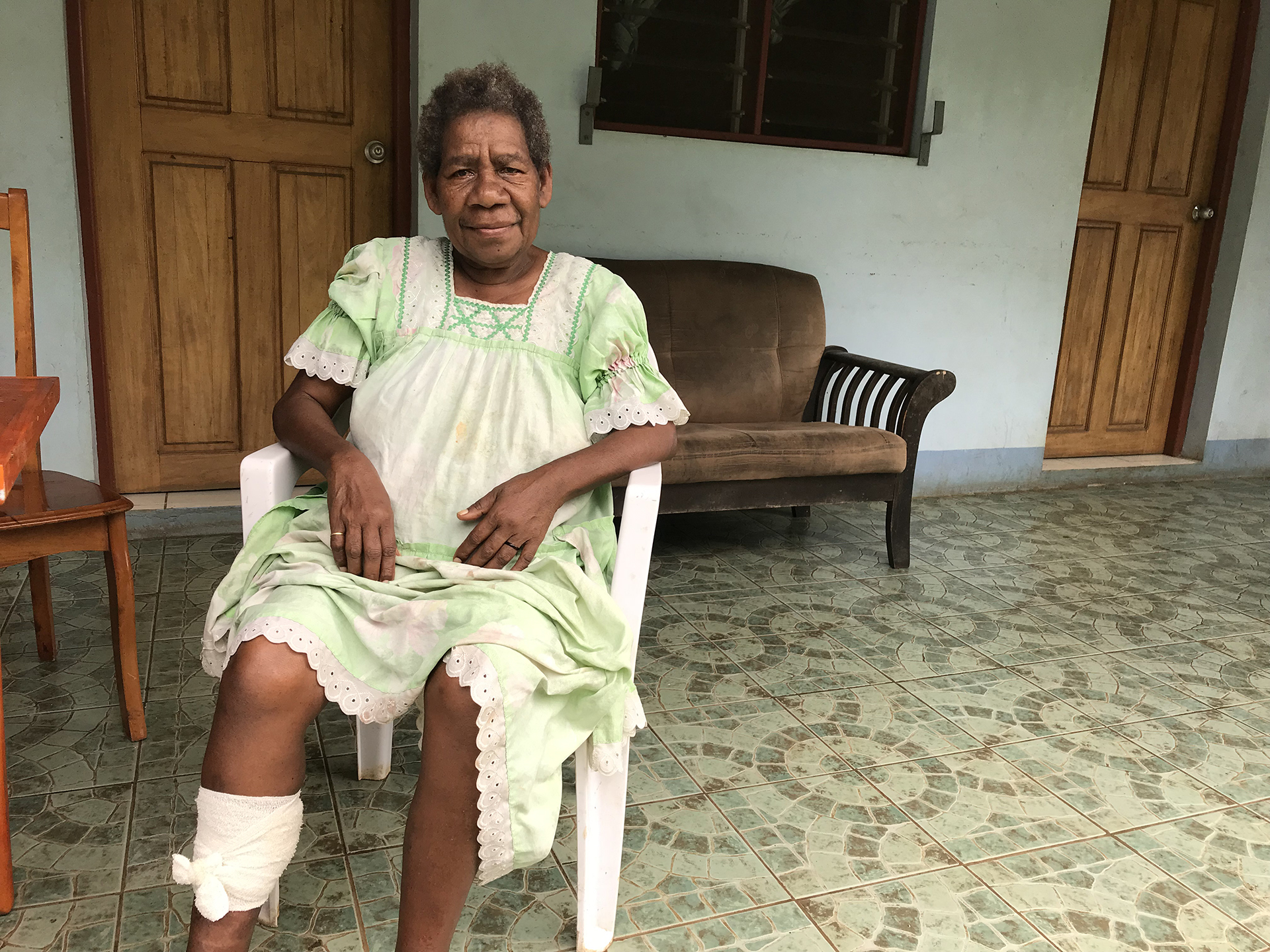
 Sera, from Port Vila in Vanuatu, lives with diabetes
Credit: WHO/T. Bayandorj
Sitting under the shelter of her home in Port Vila, Sera is one of more than 25 000 people in the Pacific Island State of Vanuatu who lives with diabetes. On average across the State, 1 in 11 people are living with the condition.
Diabetes is a chronic disease that occurs either when the pancreas does not produce enough insulin or when the body cannot effectively use the insulin it produces. It is a major cause of blindness, kidney failure, heart attacks, stroke and lower limb amputation.
Sera has lost sight in her right eye due to her condition. Lower limb amputation is also common among people living with diabetes in Vanuatu.
In 2019, 61 people in the country lost all, or part of, their lower limbs from amputations needed because their diabetes was not adequately controlled. Such operations are largely avoidable, and they cause considerable distress to patients and families alike. They are also considered unacceptably frequent by the Government of Vanuatu.
Insulin: why supply and access are crucial
With its population scattered across 83 islands, reaching everyone in Vanuatu who lives with a noncommunicable disease (NCD), such as diabetes, has been both a long-standing ambition and a logistical challenge. To help achieve this goal, WHO has worked with the Government of Vanuatu to introduce a package of interventions to prevent and control noncommunicable diseases through the primary health care system.
This package, known as “WHO PEN”, sets out the best-practice care for people living with type 2 diabetes in low-resource settings. Having reliable access to insulin is a core part of the recommended pharmacological approach; adherence to oral medication, physical activity and healthy diets is not enough.
Acting on diabetes forms a core part of Vanuatu’s national health sector strategy. Alongside WHO PEN, Vanuatu’s “Fight Sik Suka” initiative seeks to reduce the incidence and impacts of diabetes through national media campaigns, programmes for healthy villages and schools, and efforts to increase community-based screening.
As part of these efforts, increasing access to insulin is a crucial piece of the puzzle. When asked why insulin is important to her care, Sera is clear: “Diabetes is taking its toll on my life. But I know that insulin is keeping me going.” It also encourages her to consider other aspects of her health: “When I depend on insulin, I have to know what I’m eating, and how can I survive in a day.”
 Rose, who lives with diabetes, would prefer to be able to control her condition from home
Credit: WHO/T. Bayandorj
Across town, Rose is another Vanuatu resident who requires ongoing care from nearby health services for her diabetes. A major challenge for her is the continual visits to hospital. Although being able to self-monitor blood glucose is only one element of managing diabetes, for Rose, having the equipment at home to enable her to do that would have made a difference: “In order for me to stay home and test myself, I need access to a blood glucose machine. Otherwise, I spend lots of the money I have on bus fare to come to hospital. If there was an opportunity to be given a machine, I would certainly like to be taught how to use it.”
For Sera, the visits to the health clinic create another challenge ̶ fatigue: “When I visit the NCD clinic, sometimes I feel really tired and I have to hang onto my carer who takes me through. I get tired, and I only wish I could receive my medication at home.”
The supply of medication is crucial. As Rose tells us, the demand for insulin across Vanuatu means she is only able to access small quantities at a time: “If it was possible to provide more than one bottle of insulin at a time, it would make my life much easier. My medication works, but I can only get so much at a time, around one month. I cannot get more because there are so many people on those drugs. It would be good to have more supplies, so I could stay home, and save money rather than have to come back and forth, back and forth.”
Sera and Rose’s testimonies highlight why strong primary health care that integrates care for NCDs is so important. Ensuring equitable and local access to medicines can lead to better patient care, and less need for expensive treatment to treat painful complications.
Despite the challenges of living with diabetes, Sera keeps a positive mindset: “Whatever diabetes has done to my life, I have to accept it in some ways. I’m enjoying life. I had better not let it slip through my fingers. I’ve got to grab hold of it, and count every day as a blessing.”
Sweet Drink Policy
Solutions to a Health Epidemic in
Vanuatu
Critical Policy Analysis
Lia Ribeiro de Noronha – s5134328
Due: June 9th, 2019
What is the problem represented to be in the specific policy?
In 2014, Vanuatu’s Ministry of Education formulated a policy to ban sweet drinks on educational campuses (kindergarten through to tertiary institutions) across the country. Sweet drinks are defined in their policy document as “drinks which contain sugar, sweetener or flavouring and have low nutritional value – carbonated or ‘fizzy’ drinks, cordials, sports drinks, energy drinks, fruit drinks, fruit juices, sugarcane juice, flavoured milks and drinks with added sugar” (p.6, Ministry of Education, 2014). These beverages are prohibited from being sold on campuses, from being “provided for free” (as contributions to class parties, community functions and fundraisers) and from being brought to school by students, staff and family. The proposed strategy is that each school will “identify rules (e.g. confiscation) for enforcing the policy internally” – aligning with the ‘Ministry of Education Head Teachers Manual’ affirmation that staff members are responsible for students’ health (p.6, Ministry of Education, 2014). The ban on sweet drinks enacts the worldwide ‘Health Promoting School’ initiative promoted by the World Health Organisation and acts in conjunction with the adjacent ‘Healthy Vanuatu School Food Guidelines’ (p.8, Ministry of Education, 2014). These school-based healthy lifestyle policies have commenced in the Shefa province (the geographically central group of islands of Vanuatu) and there are plans to extend it nation-wide. This structured and determined effort to prohibit sweet drinks in educational environments assumes a need to resolve a larger health problem, caused by the consumption of these beverages. The policy document’s ‘rationale’ section confirms this framing. To support the policy decision, it employs findings by the World Health Organisation, the World Bank and the Ministry of Education that correlate the rise in the consumption of sweet drinks correlates with the rise in non-communicable diseases (diabetes, obesity, malnutrition) and tooth decay (p.5, Ministry of This statement in the policy document encapsulates this problem understanding, “The consumption of sweet drinks has risen rapidly in Vanuatu, comparable to the increase in non-communicable diseases” (p.6, Ministry of Education, 2014) In Vanuatu, “74% of all deaths” are related to non-communicable diseases (NCDs), tackling this complex issue and devising proactive solutions has been a compelling priority for government ministries (World Health Organisation, 2018). However, for this otherwise health sector problem to be tackled by the Ministry of Education, another implied representation is that education and health outcomes are intrinsically linked. The following excerpt from the introduction section of the policy document confirms this association, “There is substantial evidence which indicates that the health of children and young people is a major factor affecting their capacity to learn. Similarly the level of an individual’s education influences their health.” (p.4, Ministry of Education, 2014). The problem construction that younger people (school-aged populations) consume higher amounts of sweet drinks (and are, therefore, more vulnerable to the development of non-communicable diseases) also justifies the policy decision to propose solutions on educational campuses. To support this understanding, the policy document refers to surveys by the World Health Organisation, stating, “the consumption of sweet drinks by young people is of particular concern; in 2011, 38% of students aged 13 – 15 reported drinking one or more cans of soft drink per day” (p.5, Ministry of Education, 2014). The policy brief also consistently mentions “improving the socio-economic outcomes for Vanuatu” (p.6, Ministry of Education, 2014). As such, this policy problem representation correlates good (healthy lifestyle) conditions for students with improving their socio-economic realities (and the realities of those around them).
What presuppositions or assumptions underlie this representation of the problem? Perhaps most the most explicit cultural assumption is that children and schools have a lot of importance in wider their community and therefore will successfully transfer healthy lifestyle learnings across society. “[The policy] can be achieved by providing health skills to almost half of the population of this country that is currently in schools, with a very high anticipation that school children will influence their parents and communities to change their lifestyles for a better healthy future” (p. _ref, 2014). In essence, the policy-makers have rested their strategy on knowledge of local dynamics of respect, applying ‘bottom-up’ influence theories to cross-age relations. Another important presupposition, on which the policy solutions are constructed upon, is that large portions of the country’s population (primarily those who live in rural or semi-urban areas) are not “employed” (under western economic constructions and definitions of what it means to be employed). The culturally embedded social structures of the ‘Barter system’ (where “goods and services are exchanged for other goods and services in return with no money involved”) are highly prevalent in Vanuatu (Anderson, 2009). However, for children to attend educational institutions, families need to provide school fees (both public and private institutions require this). The Sweet Drink Policy and the other Promoting Healthy Schools have an engrained understanding of the existence of a previously established arrangement between the Ministry of Education and the families whose livelihoods are built upon the barter system, called ‘fee in kind’ (Ministry of Education, 2018). In lieu of a monetary sum, they contribute to the sustenance and upkeep (i.e. bringing food, cleaning, gardening, contributing resources were possible) of educational locations. It is also understood, but not explicitly mentioned in the document, that sweet drinks will be substituted by local nutritional alternatives – an example that is alluded to in the cover image of the policy document is coconut water (it depicts a young girl drinking out of a coconut). The assumption is that the transition will be relatively smooth given the deep cultural significance and history connection with local foods. There is a likely inference that the move will be facilitated in schools where the ‘fee in kind’ arrangement is prominent – “currency” in barter system is often nutrient-rich organic produce (local crops of fruit and vegetables, fish from local waterways etc). It is also relevant to note the nation-wide subscription (now recently endorsed by the government) to the slow food movement, upholding protection and heritage value of local food and preparation techniques (Vanuatu Cultural Centre, 2018). The National Sustainable Development plan (also known as the ‘People’s Plan’) also highlights culture and custom as the standpoint from which decisions relating to all other pillars (society, environment and economy) must be made. Its statement “we will draw upon our rich history and traditional knowledge and practices, particularly in relation to food production and preservation”, is additional evidence of the strong cultural regard for traditionally-sourced produce (Government of Vanuatu, 2016). The first sentence of the ‘introduction’ section is “Vanuatu, as a young nation, needs to learn to live a good and healthy lifestyle” (p. _ref, 2014). The statement “as a young nation” carries meaningful connotations and deliberate representations. Young refers to the demographics of the national population – 55.53% of individuals are between 0-24 years of age (CIA World Factbook, 2018). This framing highlights the need of a health solution policy as it demonstrates for the largest fraction of national population and the health of future generations. Young also highlights the country’s recent independence from colonial powers (Vanuatu was jointly governed by France and Great Britain from 1906 to 1980). The colonial process inserts and establishes cultural patterns that continually influence society into the post-independence years. The types of food consumed, food sourcing methods, food accessibility and food culture would have all been impacted by Western values of urbanisation, industrialisation and consumerism. This has shaped Vanuatu’s current consumption habits (less traditionally sourced foods). The need to ensure the country is healthy is therefore constructed as a matter of cultural identity and reclaiming traditional values towards food.
What is left unproblematic in this problem representation? Where are the silences? Can the ‘problem’ be thought about differently?
An obvious silence is that the problem representation (rise in NCDs and other health issues) is not purely a result of sugary drinks, but also a result of the high consumption of sugar-high and low nutrition foods (i.e. rise, noodles, msg foods). For the banning sugary drinks to tangibly improve the health of students, transitions away from problematic foods need to occur alongside it. Omitting this recognition may be related to the Ministry of Education’s acknowledgement that schools have reasonable management autonomy and that specific and uncomplicated policy strategies lead to more realistic implementation. A crucial sociological dilemma that fails to be problematized is the ready availability and cheapness of sweet drinks – which has been enabled by and plays a role in enabling sugar addiction. Many of these are actually made in Vanuatu (by overseas investors) or have been introduced by the large Chinese business community. It has had an effect in rising the prices of “Island KaiKai” (local food) in both urban and regional areas. Perhaps this was characterised as ‘off-limits’ and too convoluted to address in this specific policy however it important to address, as it is a caveat to the policy’s success. It undermines the assumption that the virtues and habits of healthy lifestyles will be passed on to wider society by school-going children. The essential and core problem representation is the existence and consequent consumption of addictive sweet drinks. This cannot be tackled effectively across wider society without adjacent legislation to reduce the accessibility of poorly nutritious beverages in all situations (not just within educational campuses) – the consumption of sweet drinks outside of school hours cancels out the benefits of the Health Promoting Schools. However, the fact that junk food and drink availability is seen by many locals as a sign of progress, development and modernity will hinder deeper society-wide restrictions on sweet drinks. In semiurban areas, many families own small businesses in the form of roadside ‘kiosks’ which primarily stock candies, sweet drinks, cheap imports of junk food snacks. It is unlikely that vendors will discontinue the purchase of nutritionally problematic items from wholesalers as they are often the cheapest options. The policy document omits the recognition that many families depend on businesses such as these for their financial livelihood; it will be difficult for students to debate and alter this entrenched system. The accessibility of sugary drinks also debases the assumption that communities will rapidly and easily adopt locally-sourced organic diets. While this may be effective in the communities with stronger barter systems and ‘fee in kind’ arrangements, many families (particularly in urban hubs) live within the Western capitalist money-based organisation and survive on meagre minimum wages. As organic produce is expensive, many will be disinclined to transition. If families are to viably and sustainably pursue an organic produce avenue, land access to grow crops is favourable. Food security concerns are brought into play for those who don’t have land rights in urban areas. The policy has also overlooked the uniqueness and complexity of the various school types in Vanuatu. The dual-administration of the New Hebrides (colonial Vanuatu) instituted separate French-speaking and English-speaking schools. The amount of schools, curriculum, educational outcomes, regional accessibility (ability to commute) are among some of the many factors that have been impacted by this dual system. The differences in management between private and public schools also impact issues such as infrastructure, resources and the employment of qualified teachers. The task of ensuring there are equal standards and initiatives across all schools in the country verges towards being labelled as an ‘intractable/wicked’ problem. In practical terms, there will be disparities in the effectiveness and benefits of the Sweet Drink Policy between schools.
What effects are produced by this representation of the problem?
The social group that directly benefits most from the policy decision are school-going youth, acknowledging the aforementioned assumption that these student’s families will indirectly benefit from the healthy lifestyle teachings. Vanuatu has a high drop-out rate that increases exponentially as the grades (year in school) increase. There are many youth who leave school (for financial, circumstantial or academic reasons) in high school or do not continue into tertiary education. These young people will not reap the benefits of the Healthy Schools Program and will not have access to Ministry of Education awareness programs (Ministry of Education, 2018). As the root of represented policy problem is the prevalence of sweet drinks, a major group being held culpable are the manufacturers, wholesalers and vendors. Powerful marketing campaigns (which overwhelmingly target young people) have also played a key role in the widespread dissemination of sweet drinks. No research exists to observe whether company profits have been affected by the policy. However, there has been an obvious and concerted effort by prominent beverage companies Vanuatu Beverage Limited (VBL) and Azure to improve their brand image to educational institutions and young people (McGarry, 2018). For example, earlier this year the Shefa province Education Office signed a memorandum of understanding with VBL establishing that all water for “events, canteens and offices will be from VBL” and VBL in return will “provide workshops on waste disposal and recycling” (Roberts, 2019). This is an interesting tactic in brand reputation sustenance – while the arrangement adheres to the Sweet Drink Policy as it relates to the sale of water, public opinion of the company will improve and perhaps influence the public to purchase their other sugar-intensive products. To an extent, by problematizing the prevalence of sugar-related serious health issues in youth, the policy has also held families responsible for not restricting the high consumption. This trail of onus proceeds to the Ministry of Health for not having done enough to prevent NCD rise through awareness-raising of the consequences of non-nutritious food and drink. In what ways could the policy ‘solution’ be regarded as a success or failure? Following Marsh and McConnell’s various criteria for policy success, the Sweet Drink Policy from its development to its implementation, can holistically be classified as successful. ‘Process success’, determined by “legitimacy in the formation of choices (…), produced though due processes of constitutional procedures and values of democracy, deliberation and accountability” (p.571, Marsh & McConnell, 2010) is evidenced by the extensive cross-ministerial meetings that occurred and revisions of existing key policies and consideration of government agendas. The government of Vanuatu published two strategy documents as guidelines for policy-making across sectors. An overarching one that determines the “political sustainability” of most policy decisions is the PPA – the ‘Priorities and Action Agenda 2006 – 2015’. This document’s delineates government’s goal of ensuring “an educated, healthy and wealthy Vanuatu”, where collaboration between the Ministry of Education and the Ministry of Health are key (Government of the Republic of Vanuatu, 2006). The other guiding document is the Vanuatu Education Sector Strategy (VESS) which states, “VESS aims to address longer-term policy performance issues (…) this includes healthy schools for our children” (p.3, Ministry of Education, 2006). It is important to note that both these documents incorporate stakeholder consultation. Along with the integration of extensive research, expert advice and guidelines from international bodies (the World Health Organisations, the World Bank and various NGOs), the Sweet Drink Policy demonstrates extensive “deliberation”, endorsement from “credible voices” and a “powerful coalition of interests” (p.571, Marsh & McConnell, 2010). Moreover, Marsh and McConnell’s “values of accountability” have been upheld in this concluding statement in the policy document, “The Policy will be reviewed in September annually, the review will consider the Policy’s effectiveness in reducing the consumption of sweet drinks in schools and kindergartens, and be informed by observations, feedback and provincial sales figures.” (p. 8, ref, 2014). The “joined-up government” aspect of the policy solution is the strongest indicator of ‘operational success’ – it “helps to deliver better public services and address intractable issues which under traditional ways of working would have proved difficult to resolve” (p.573, Marsh & McConnell, 2010). There is a Memorandum of Understanding between the Ministry of Health and Ministry of Education to achieve the VESS and PPA document goals. Where possible, these ministries have committed to acting cooperatively to address the growing prevalence of nutrition-based diseases. Additionally, policy professionals from both divisions are involved in the Health Promoting Schools committee. Figure 1 is an example of cross-departmental collaboration. There is notable ‘Outcome success’ as the Sweet Drink Policy has effected further action. The ‘frontline’ policy implementation professionals have responded positively to the policy decision and consequently established further measures to raise awareness, monitor and improve health and nutrition in schools. The previously mentioned policy gap in addressing the consumption of sugary or poor nutrition foods was amended by the creation of the ‘Vanuatu Guidelines for Health Promoting Schools’ which outlines appropriate and balanced nutrition for school canteens. Each school develops their own specific policies; figure 2 is an example (Simon and Niimi, 2018). A strong network of school principals, volunteer nurses, and 80 School Officers (‘Improvement Officers’ and ‘Inspection Officers’) has been established across the country. In collaboration with trained school nurses volunteering under JICA (Japan International Cooperation Agency) a body-mass index (BMI) annual record has been filed and regularly updated to the Ministry of Education’s online database, ‘Open VEMIS (Vanuatu Education Management Information System)’. This has allowed for detailed comprehension of the health benefits of improving food and drink diets in schools (the figure 3 graph demonstrates reduced obesity rates after the Sweet Drink Policy and School Canteen Policies) (Simon and Niimi, 2018). Most impressive is the ‘resource success’. The further actions detailed above were achieved with very minimal specific Sweet Drink Policy implementation funding. Some funding was provided by JICA to procure scales and measuring tapes for BMI record-keeping. Digital and hard-copy awareness materials were arranged by schools and further BMI monitoring training materials were provided by the Vanuatu Institute of Teachers Education. The policy was deliberately designed for schools to voluntarily fund the implementation themselves (by allocating finances from their overall school grant budgets), to minimize the dependency on government or donor funding. According to the program’s ‘Planning and Budget Advisor’, the implementation of the Sweet Drink Policy has been “a successful case of financial sustainability” (personal communication, Noronha, 2019). There are plans underway extend the policy and overall Health Promoting Schools initiative to two more islands, Espiritu Santo and Malekula (personal communication, Noronha, 2019). Influenced by the country-wide moves to ban unhealthy food and drinks, provincial leaders in the Torba province have advocated for “a comprehensive ban on all junk food imports” to their lands (Ives & The New York Times, 2017). These are clear indications of ‘political success’ as governments and wider society have considered the policy’s benefits and are willing to broaden the program’s scope.
Conclusion
The Vanuatu Ministry of Education Sweet Drink Policy prohibiting sugary drinks on educational campuses on Shefa province is designed as an innovative solution to the represented NCD rise problem. By tackling the large-scale health issue on educational campuses, the policy sets out to address its assumption that healthy environments benefit education outcomes and socio-economic opportunities. Also engrained within the policy are presumptions that communities will easily adapt to the proposed transition from sugary drinks to local organic alternatives. In the recent years of the policy’s implementation, this scenario has met with positive results and led to excitement from policy professionals, further actions and the creation of adjacent policies to provide a more holistic solution to the nutrition-based health dilemma. The Sweet Drink Policy sets a precedent for measures to ban problematic foods and drinks to be followed across the pacific, where the impacts of the NCD epidemic are most felt. “Public health experts who study the island nations of the Pacific (…) say that bold measures are necessary for an impoverished and isolated region of 10 million people, where the cost of sending legions of patients abroad for dialysis treatment or kidney transplants in untenable”(Ives & The New York Times, 2017). Appendix  Figure 1
  Figure 2
  Figure 3 These are from Simon, K., & Niimi, I. (2018). Summary Report for 2018: Shefa Provincial Health Promoting School Committee. Port Vila, Vanuatu. References Vanuatu Ministry of Education and Training. (2014). Sweet Drink Policy. Port Vila, Vanuatu. World Health Organization. (2018). Noncommuinicable Diseases (NCD) Country Profiles. Retreived from https://www.who.int/nmh/countries/vut_en.pdf?ua=1 Anderson, K. (2009). Barter System History: The Past and Present. Retrieved from https://www.mint.com/barter-system-history-the-past-and-present Whipping, J, & Vanuatu Ministry of Education and Training. (2018). School Grants Code. Port Vila, Vanuatu. Vanuatu Cultural Centre. (2018). Siloa Slow Food Vanuatu. Retreived from https://vanuatuculturalcentre.gov.vu/index.php/film-and-audio-studio/siloa-slow-food-vanuatu Government of Vanuatu. (2016). National Sustainable Development Plan 2016 to 2030. Retreived from https://www.gov.vu/attachments/article/26/Vanuatu2030-EN-FINAL-sf.pdf. Port Vila, Vanuatu. McGarry, D. (2018). Plastic recycling programme grows. Vanuatu Daily Post. Retrieved from http://dailypost.vu/news/plastic-recycling-programme-grows/article_c127d6b5-5594-5f46-b949-d0ca9b33fe54.html Roberts, A. (2019). VBL to provide water and start recycling system in SHEFA schools. Vanuatu Daily Post. http://dailypost.vu/news/vbl-to-provide-water-and-start-recycling-system-inshefa/article_0fc61eec-0985-5f7c-9802-e86e99378afd.html Marsh, D., & Mcconnel, A. (2010). Towards a framework for establishing policy success, Public Administration, 88(2), 564-583. Doi:10.1111/j.1467-9299.2009.01803.x Government of Vanuatu. (2006). Priorities and Action Agenda. Retreived from https://www.adb.org/sites/default/files/linked-documents/cobp-van-2015-2017-sd.pdf Ministry of Education. (2006). Vanuatu Education Sector Strategy 2007-2009. Retrieved from https://dfat.gov.au/about-us/publications/Documents/vanuatu-education-sector-strategy-finalversion.pdf Simon, K., & Niimi, I. (2018). Summary Report for 2018: Shefa Provincial Health Promoting School Committee. Port Vila, Vanuatu. Ives, M. (2017). As Obesity Rises, Remote Pacific Islands Plan to Abandon Junk Food. The New York Times. Retrieved from https://www.nytimes.com/2017/02/19/world/asia/junk-food-ban-vanuatu.html Bacchi, C. L., 1948. (2009). Analysing policy : What’s the problem represented to be? (1st ed.). Frenchs Forest, N.S.W: Pearson Eduaction
Recent Comments